
♥ OCCUPATIONAL THERAPY
Occupational Therapy Was Hard, But It Taught Us So Much
Our journey through sensory challenges, motor skills, small rewards and big surprises along the way.
 By Parenting EssentialsJune 27, 20266 min read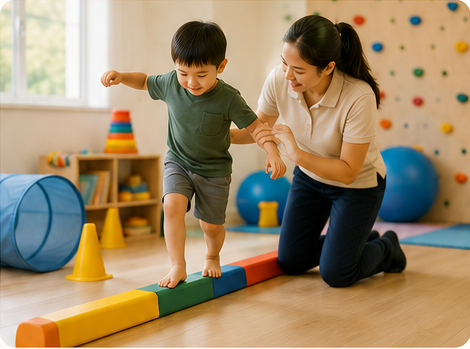
Occupational therapy has probably been one of the most challenging parts of our autism journey.
Over the last five years, we have worked with more than six different occupational therapists. Every time there was a change, it took time for the new therapist to understand my son, build trust, and learn what worked for him.
When we first started OT, there were so many things we needed support with.
He was highly sensitive to textures. He was a picky and fussy eater. He would avoid touching certain foods or materials. He had poor fine and gross motor skills, weak core strength, attention difficulties, balance challenges and limited body awareness.
Because of those difficulties, many OT activities were very hard for him. He cried during many sessions. He refused activities. He became frustrated.
And honestly, sometimes I felt frustrated too, not at him, but because I could see how hard everything felt for him.
At some point, I realised that before we could work on the actual skill, we first had to help him participate. He needed to feel familiar with the activity. He needed to know it would end. He needed motivation. He needed time.
A gentle reminder
Every child is unique. What worked for our son may look different for yours. Trust your child, trust the process, and be kind to yourself.

What our OT journey looked like

1 We thought OT was only about activities and exercises
At first, we thought OT was just tasks and worksheets. We later learned it was so much more.

2 OT helped us understand sensory needs
Textures, touch, sound, movement and food sensitivities were a big part of his everyday life.

3 Textures, food, touch and messy play were hard for him
He avoided many textures and foods. Messy play was very overwhelming in the beginning.

4 Fine motor skills needed support
Puzzles, cutting, buttons, threading and using tools all took time and practice.

5 Play was used to build confidence and flexibility
Puzzles, obstacles, water play and favourite toys kept him motivated and engaged.

6 Transitions and new activities took time
Counting, visual cues and preparing him in advance helped reduce anxiety.

7 Small changes at home made a difference
Introducing things gently, without forcing, and repeating them over time helped him succeed.

8 Progress was slow, but everyday life became easier
One small win led to another. Daily routines became more manageable and joyful.
We started with what already felt familiar
In the early days, we started with simple activities that connected to things he already liked. We used basic animal and shape puzzles because he enjoyed them. We used fruit-cutting toys, which he loved and still enjoys to this day.
Balance beams became a regular activity for body awareness and gross motor skills. These activities were not always easy for him, but they helped him slowly become more aware of his body and movement.
Water activities also worked well for him. Because he loved water, we started using water-based play to help him participate for longer. When an activity included something he naturally enjoyed, he was more likely to stay engaged.
Numbers and rewards helped him take the first step
One thing that helped us was counting. Depending on the activity, I would say, "Only three," or "Let's do ten."
Sometimes it was three jumps, three turns, three touches, or ten seconds. Giving him a number helped him understand what was expected and when it would finish. It did not work every single time, but many times it helped him try his best.
In the beginning, when nothing seemed to work, we also used rewards. He loved gummy hotdogs, Kinder Surprise and gummy burgers. So I started using them as rewards to help him attempt difficult activities.
At first, the therapist did not really like that approach. But I insisted, because if a small reward helped him try something new and become familiar with it, then I felt it was better than him becoming frustrated and refusing everything.
For us, the reward was not the long-term goal. It was a bridge. Once he became more comfortable with the activity, we slowly reduced the reward.
There were also times when tasks became more difficult and I used YouTube as a short reward. He loved watching videos, so I would let him watch for a minute after trying something hard.
It was not a textbook approach, but it helped him slowly become familiar with difficult tasks and at least attempt them. Looking back, I think parents sometimes feel guilty for using rewards. But for us, rewards were not about bribing him forever. They were about helping him take the first step when the activity felt too overwhelming.
Readiness mattered more than pressure
Another thing I learned was to introduce things gently and not force them.
Sometimes I would show him an activity, and he would not be ready for it. Instead of pushing too hard, I would leave it and bring it back again after some time. I kept showing it to him at regular intervals.
A few months later, I would often see him succeed at the same thing that once felt impossible.
This happened with many daily-life skills too. For example, I frequently showed him how to put on buttons. I started with something easy, like a pyjama button that was not too tight. I showed him again and again without forcing it.
Then one day, just like that, he pushed my hand away and put the button on himself. Moments like that are hard to describe.
There were also beautiful surprises. One day, he went inside, changed himself into his swimming clothes, came running out and said, "We go swimming."
For another child, that may sound like a small thing. For us, it meant communication, planning, independence, dressing skills, confidence and joy all coming together in one moment.
Toilet training taught us to pause and try again
One of the most challenging daily-life goals was toilet training.
We tried once during the holidays by removing nappies and taking him to the toilet regularly in short intervals. I thought that if we stayed consistent, he would slowly understand.
But it did not work. There were frequent accidents, and it became stressful for everyone. So we paused it.
Then, when he was around four, we decided to try again. And just like that, he adjusted. From the first day, we had zero accidents during the day and only one accident at night.
It was amazing. He has surprised us many times like that, struggling with something for so long, and then suddenly reaching a milestone when he was ready.
That taught me another important lesson. Sometimes our children are not refusing because they will never be able to do something. Sometimes they are just not ready yet.
OT helped us understand progress differently
OT helped us understand that progress does not always happen in a straight line. Sometimes it feels like nothing is working. Sometimes it feels like your child is not learning. But then one day, something clicks.
For us, OT was not easy. It involved tears, trial and error, therapist changes, rewards, pauses, and many moments of doubt.
But it also helped us understand our son's sensory needs, his body, his confidence, his daily life skills, and how much support he needed before he could try something new.
If you are starting OT and your child cries, refuses, or struggles during sessions, I know how hard that can feel.
But sometimes the first goal is not completing the activity perfectly. Sometimes the first goal is simply helping your child feel safe enough to try.

Progress looks different for every child.
OT taught us that patience, consistency and celebrating small steps help our child feel capable and confident.
Keep going. You're doing better than you think.